casino365 skill bounds: what you can choose, not win
Before the pause, a player takes the first available discard. After the pause, the same player names the exposure that discard would create. The assumption that most affects the rest of this note: card memory changes what is known. It does not change the unread stock.
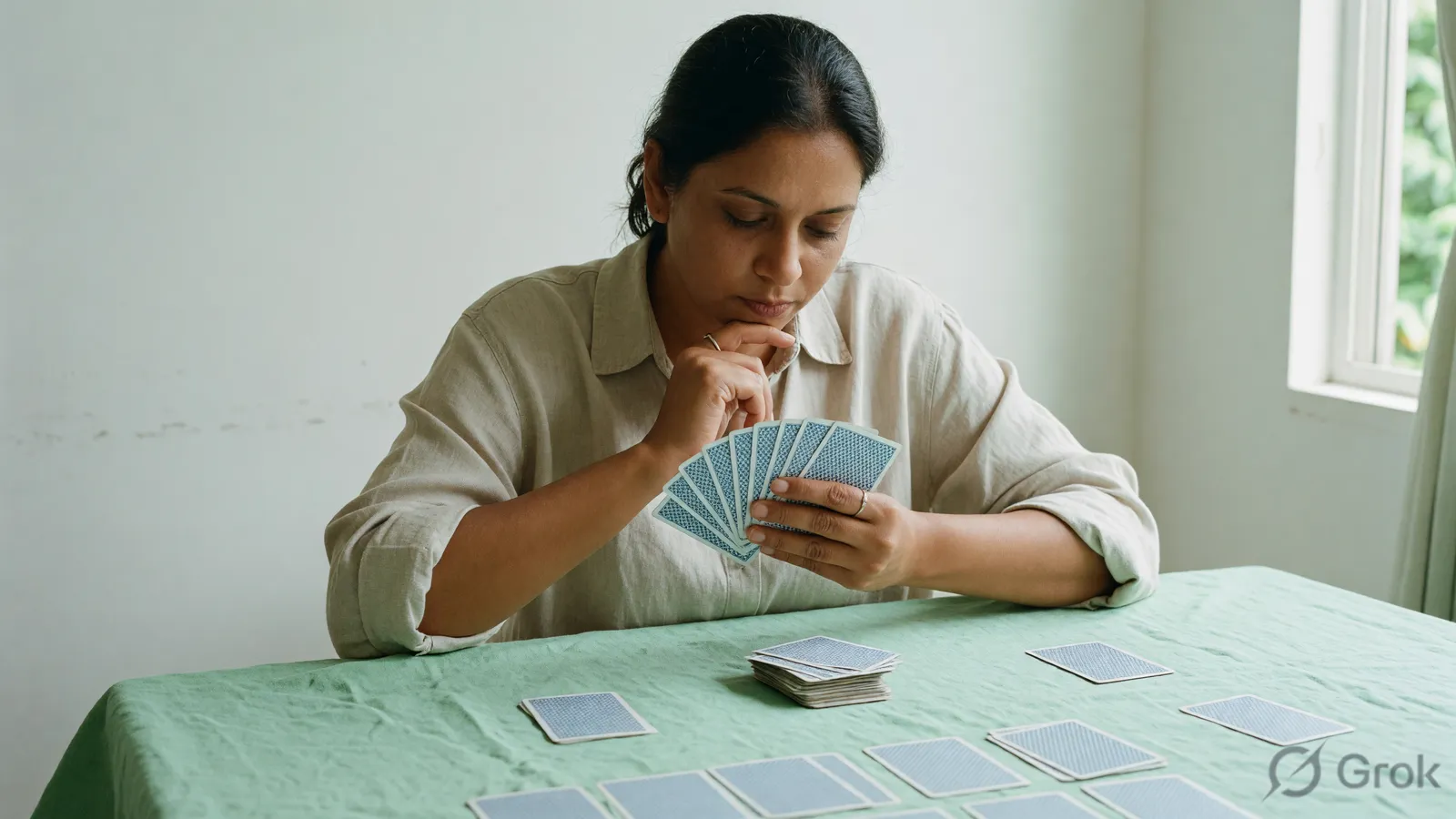
A thinking pause. Not a victory pose.
Before: blind pickup is a default, not a method
A closed stock card is unknown to everyone. Taking it is often correct when the discard would complete a visible opponent run. Taking it because you have no plan is not a method. The legal choice is still one card in, one card out.
If you cannot state why the discard is unsafe, you are guessing. Guessing is allowed. Calling it skill is not.
During: the two-card fork
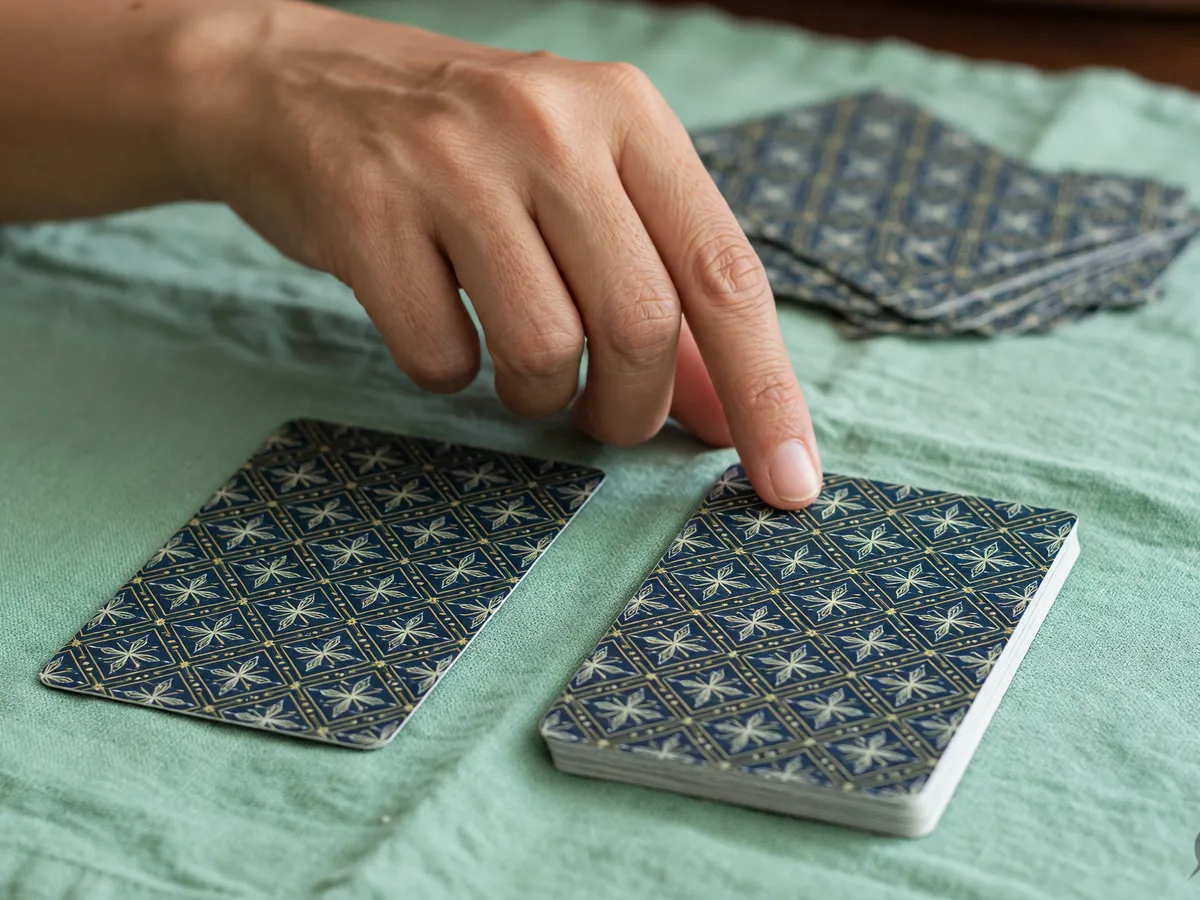
Two candidates. The decision is exposure, not a predicted next rank.
Example A: the opponent has already picked two cards in one suit from the discard. Throwing the connecting rank in that suit is a gift. Example B: throwing a rank that has not appeared, from a suit no one has touched, is the safer of the two. Neither example produces a win rate.
You are reducing a known leak. You are not controlling the next stock card.
A wild card is a hold decision, not a mascot
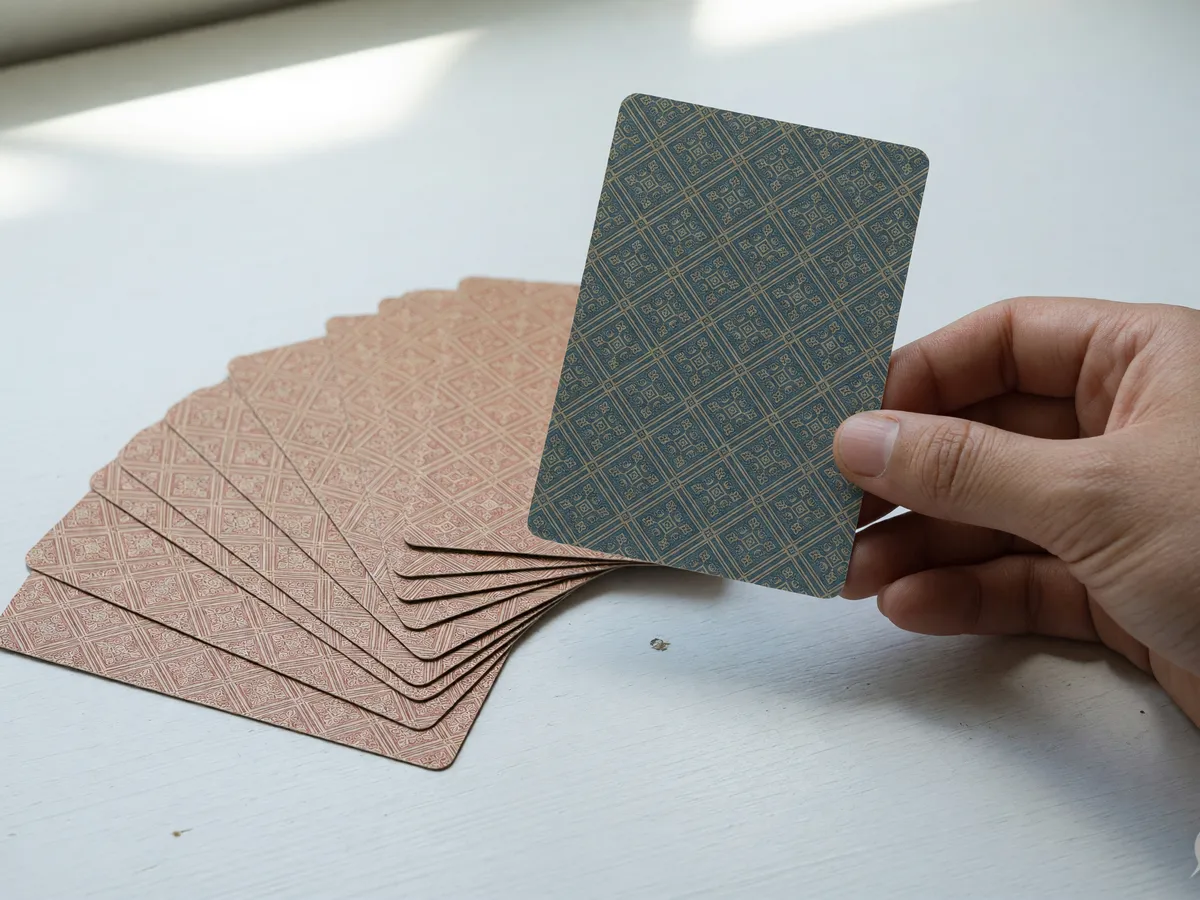
The isolated card stands for a hold decision. No printed joker mark.
If the isolated card is your only path to a pure sequence, holding it while you chase sets is backwards. The first legal requirement still sits on the rules desk. Strategy starts after that requirement is visible in your list.
If the isolated card is extra, holding it can block an opponent who needs a wild finish. That is a real trade-off. It still does not let you name the next stock card.
After: declaration timing versus the unread pack
Chance lives in the unread bulk. No graphic overlay.
Once your groups are legal, waiting for a prettier layout is a choice to remain exposed. The closed stock can still produce the card an opponent needs. Delay has a cost even when your own hand is finished.
The boundary: skill chooses when to stop being exposed. Chance still owns every unread card. This desk will not convert that sentence into a winning percentage.
Legal skill
Pickup source, discard identity, group order in the list, and the moment you declare. Those actions change who sees what and how much time you remain open.
Chance outcomes
The next stock card, the opponent’s hidden cards, and every card still in the closed pile. Memory catalogues the past. It does not write the future pile.
What would change this judgment
A published house sheet that redefines a legal group. A published computer opponent with disclosed draw rules. Neither is on this desk today. Until they appear, treat human tables as mixed skill and chance, with chance retaining the unread stock.
Does remembering discards raise the win chance to a number?
Memory changes what you know about exposed cards. It does not assign a published win rate. This desk will not invent a percentage.
Is holding a wild card always correct?
No. If you still lack a pure sequence, the wild card is often better used to finish a legal group than held as a trophy.
When should I declare?
When every group is legal and the confirm step still makes sense under the clock. Early declare is not a skill prize if the layout is illegal.
A discard log you can keep on paper
Write suits that have been taken from the discard. Write ranks that have appeared twice. That is the whole log. If you need a spreadsheet of expected values, you have left the evidence this desk can support.
The log helps you avoid Example A. It does not forecast Example B’s replacement from stock. Keep the two jobs separate and the page stays honest.
Common over-claims to drop
Do not say a seat is “pure skill” because pickup is a choice. Do not say a seat is “pure luck” because the stock is random. Both sentences erase a half of the table. The useful sentence is the boundary column above.
Suits taken from discard. Ranks that appeared twice. Extra turns you stayed open after a legal layout. That is the ceiling. An expected-value grid is past the evidence.
Gift versus story
Two hearts taken by one seat is a signal. Completing that run is a gift. Inferring the other eleven cards is a story. Keep the signal.
Delay after a legal layout
Waiting for a prettier unused wild keeps you exposed. Chance still owns the unread stock. Delay is a choice about exposure, not a predicted win.
No mid-note pep
If you came for a winning pattern, stop. Write a session stop. Skill talk that turns into encouragement is how caps move.
One more bound
Memory catalogues the past. It does not author the closed pile. Any writer who converts memory into a published win rate is inventing a dataset. Ask for the sample. This desk has none.
Signal not story
Two hearts taken by one seat is a signal. Completing that run is a gift. Inferring eleven hidden cards is a story. Keep the signal.
Keep that observation inside the strategy job. If you need another job, leave and pick it by name.
Notebook ceiling
Suits from discard, ranks seen twice, extra open turns after a legal layout. No expected-value grid.
Keep that observation inside the strategy job. If you need another job, leave and pick it by name.
Delay cost
A finished legal layout that stays undeclared remains exposed. Chance still owns the unread stock.
Keep that observation inside the strategy job. If you need another job, leave and pick it by name.
Wild hold trade-off
Hold a spare wild to block. Do not hold the only card that would finish your pure sequence.
Keep that observation inside the strategy job. If you need another job, leave and pick it by name.
No percentage
Ask any writer who quotes a safe-discard rate for the dataset. This desk has none.
Keep that observation inside the strategy job. If you need another job, leave and pick it by name.
Pause names
Name the pause: feed-avoid, connector-avoid, or delay-avoid. Unnamed pauses are stalls.
Keep that observation inside the strategy job. If you need another job, leave and pick it by name.
Pep is a leak
Encouragement after a loss moves caps. The boundary column is the offering.
Keep that observation inside the strategy job. If you need another job, leave and pick it by name.
Next door
Write a session stop before you sit again.
Keep that observation inside the strategy job. If you need another job, leave and pick it by name.
What to carry away from strategy
Count extra open turns after a legal layout. Stop counting when you declare. The count is exposure. It is not a trophy and not a forecast of the next stock card.
If that sentence is not the decision you needed, you opened the wrong door. Use the topic list and pick the job by name: format, declaration, skill, usability, corridor, limits, hop or dated correction.
Unpublished figures stay blank. Blank is a fact. Filling a blank to feel finished is how welcome amounts appear. They will not appear here.
Age and place still sit in front of any seat. A hop is still a hop. A ticket is still a ticket. Those three remain true after you leave the strategy note.
Come back when a dated note names a primary source, or when your notebook shows an inspectable fact such as a printed drop, a visible session lock or a kept ticket number.
Until then, the strategy job is either done or it is waiting. Waiting needs a named missing fact. Done needs a next action that is not a recap.
A last check on strategy
Count extra open turns after a legal layout. Stop counting when you declare. The count is exposure. It is not a trophy and not a forecast of the next stock card. If you cannot repeat that line without adding a number, you are ready to leave.
A scene that belongs only to strategy
A writer quotes a 60 percent safe discard. Ask for the sample. There is none here.
Write that scene in a notebook if it matches you. If it does not match, close the note. Mining one URL for every answer is how desks become noise.
When a primary source arrives, add a dated line a reader can check. Do not add a warmer adjective. Adjectives are how unpublished bonuses return.
If you are tired, set a session stop anyway. Tired reading is how people tap PLAY NOW to escape a paragraph. The hop will still be there after water.
If you need a human, keep a ticket. If you need a seat, pass age and place. If you need a number the product has not printed, leave the number blank.
The strategy note should stay narrow enough that a later correction can find the right sentence. Narrow is a feature.
Carry only the scene and the next named action. Everything else is someone else’s URL.
A second pass on the same scene: name the object you can point at, name what is unpublished, and name the next door. Three names. Then leave.
If you cannot name the unpublished part, you are about to invent a figure. Stop. Invention is how licence slogans and welcome amounts get into rummy copy that cannot support them.